How to Make the Most of Your Makeup Palettes
Makeup palettes are a terrific way to test a variety of colours in one convenient packaging, yet we frequently only use one hue and ignore the others. You can get the most out of a face palette if you know how to apply it properly. Remember that your skincare comes first, just like with any other sort of makeup-moisturize your face thoroughly before putting any makeup.
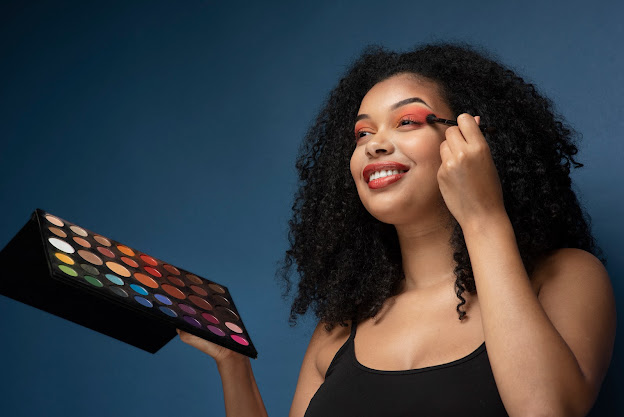
How to Make the Most of an Eyeshadow Palette
For stacking various complementing colours, an eyeshadow palette is great. Bobbi Brown uses three shadows in her basic eye look: light, medium, and dark neutral hues (in a matte or flat finish), all of which are tailored to your skin tone. When looking for an eye palette, seek colours that match your skin tone and keep in mind that black mascara is the only mascara you should use.
Light: taupe, chestnut brown, and a delicate bone or ivory-coloured shadow
Taupe, chestnut brown, and espresso brown are all medium-to-tan shades.
Medium brown, dark brown, and deep brown/black shadow are all dark/deep shades.
Use the following as
a basic guideline for applying eyeshadows:
The lightest shadow should be placed as a base all over the lid to absorb excess oil and level out the tone of your eyelids.
For depth, use a mid-tone shadow on the visible lid below the crease.
The darkest shadow is used to add definition to the lash line or to create a smokey eye.
A fourth dark hue can be added for a smokey eye, and eyeshadows come in matte, flat, and shimmer finishes, so you can experiment with texture. If you want your eyeshadow to compliment your eye colour, remember that cool colours contrast with warm colours, which is why a blue eyeshadow or navy eyeliner looks so stunning on brown eyes.
Blue eyes will be highlighted by almost any dark colour. Bobbi prefers the effect of a smudged black liner against her blue eyes. A gold shimmer can also be used for a more glam effect.
Green eyes are accentuated by bronze, copper, gold, and rose gold tones. Silver and gunmetal grey are also eye-catching.
Eyes: brown and hazel Because brown is a neutral colour, blue, violet, and emerald—any brilliant jewel-toned colour—looks beautiful against brown eyes. When colour contrasts are added to brown eyes, they appear brighter. Hazel's eyes are also brightened by rose gold and copper tones.
Meet one of your new friends.
What Is a Contour Palette and How Do I Use It?
While you can contour your face with two different colours of concealer, highlighter, bronzer, or foundation, a contour kit or highlighter palette will give you all the shades you need in the same textures. Use a shade darker than your natural skin tone to add shadow to cheekbones and anywhere else you want to sculpt, and a shade lighter than your skin tone on areas of your face that naturally reflect light, including the top of your cheekbones and your browbone. Pink blush on the apples of your cheeks might help to unify the look.
What Is a Color
Correcting Palette and How Do I Use It?
Most palettes consist of similar colours that work well together, but a colour correcting palette is something quite different. A decent colour correcting palette will have a variety of concealer colours that will neutralise colours on the other side of the colour wheel. Look for green to counteract redness, peach to counteract dark circles, and yellow to counteract discolouration. Underneath your foundation, layer your colour correcting concealer so that the vivid colours aren't noticeable after your makeup is on.

What Is a Lip Palette and How Do I Use It?
Lip palettes are very handy for creating the right lip colour: You may prefer an orangey-red on some days and a brick red on others. You can also make an ombré lip with a lip palette: Apply a darker shade to the outside of your lips and a lighter shade to the middle, then blend the two using a lip brush. In our guide to cosmetic brushes, you can learn more about different brushes.
Comments
Post a Comment